
Products
EV-HIV
Decoding cell-to-cell communication to enable earlier and more precise biomarker detection.
Platform
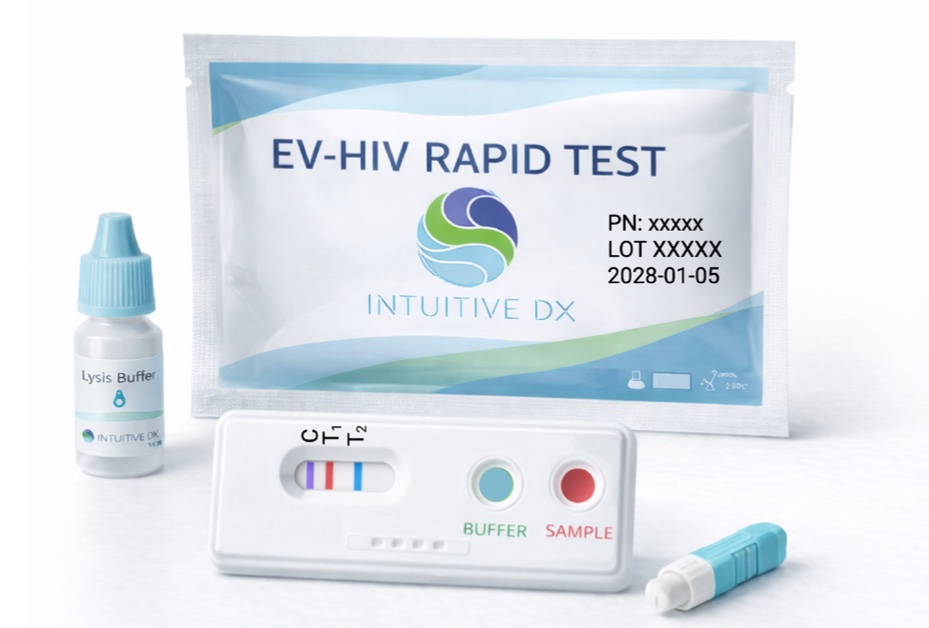
Our EV rapid test platform is the first to harness EVs in a lateral flow format. Detecting EV cargo on lateral flow opens the possibility of greater testing flexibility and accuracy. The tools powering our platform are available to help others progress their research.
With this platform, we’re tackling key research questions: Where are the body’s hidden messages? How do we decode them? How do we broadly leverage the information they contain?
By analyzing EV’s molecular “language” in a rapid, lateral flow format, we can detect target biomarkers with unprecedented precision. It’s like tapping into the cells’ encrypted email system—giving researchers critical insights with speed and ease.
EV-HIV
A new paradigm for antigen testing:
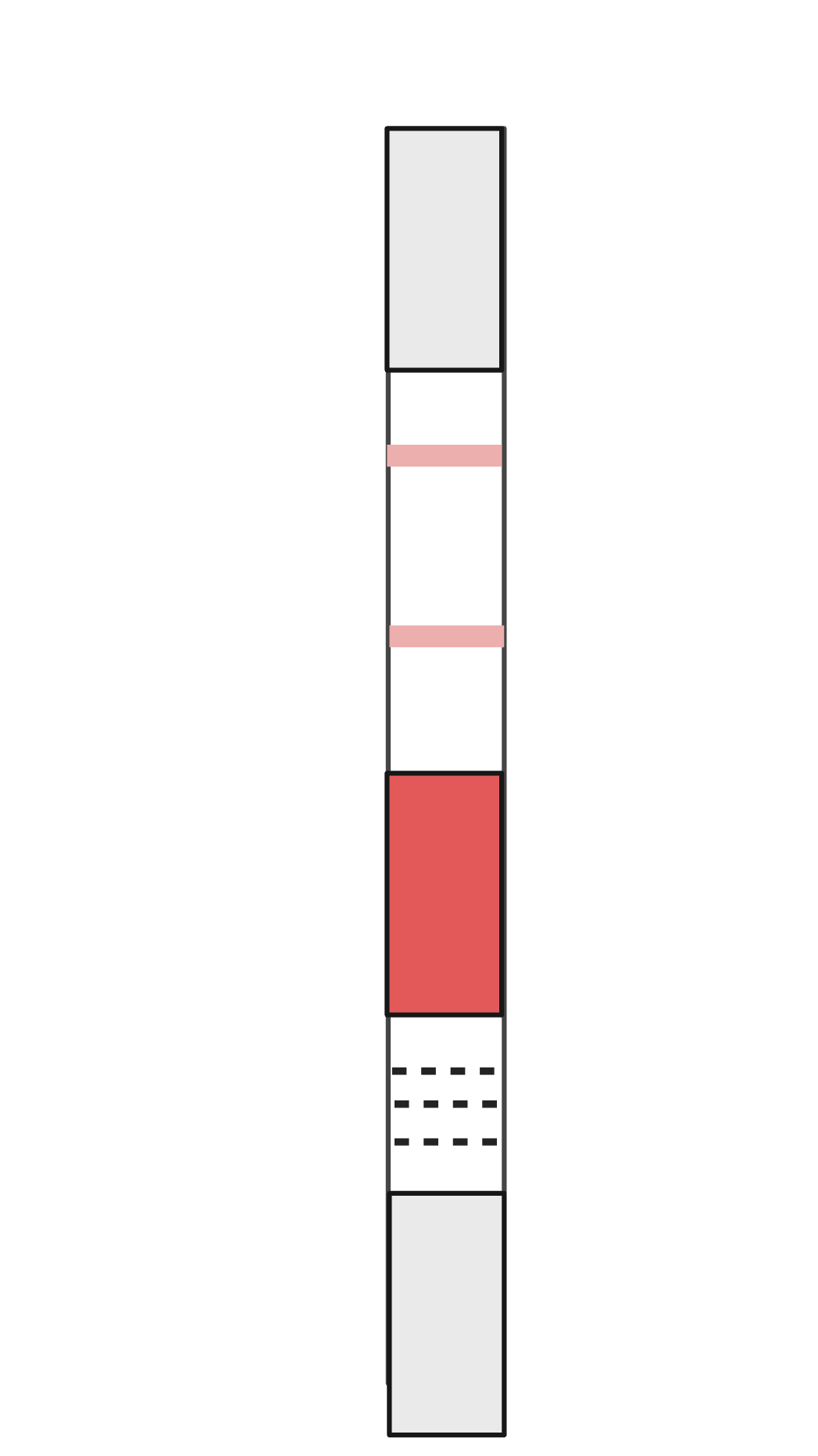
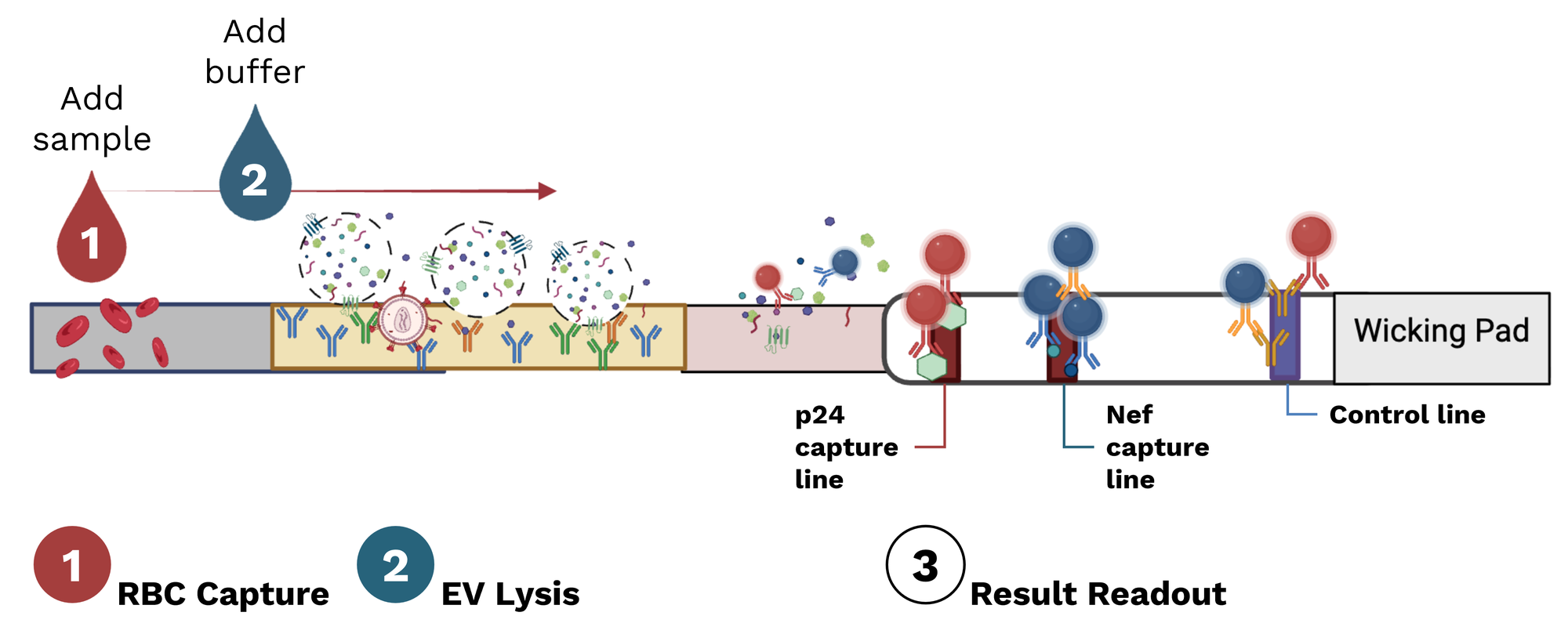
- Lateral flow detection of HIV antigen from HIV-infected cell-derived EVs.
- Captures and lyses EVs on the lateral flow strip.
- Detects p24 and Nef HIV proteins.
Technical downloads
Using common features of viruses and EVs for a novel EV-based lateral flow test for HIV (Extracellular Vesicle).
Using Extracellular Vesicles (EVs) for Disease Screening (Poster)
EV-HIV Rapid Test Brochure
Common questions
EV-HIV qualitatively detects the presence of HIV proteins NeF and p24.
There are three kinds of targets HIV tests look for:
– Detection and quantification of antibodies to HIV produced by the immune system in response to HIV exposure.
– Detection of HIV protein p24 produced by the virus.
– Detection of HIV nucleic acids.
EV-HIV is different because:
– It detects two HIV proteins – p24 and NeF
– It detects these biomarkers from two sources simultaneously – the virus and HIV-infected cell-derived EVs.
Detecting two biomarkers from both the virus and EVs from virus-infected cells enables earlier detection because EVs containing HIV antigens are made prior to virus replication and are in circulation in high numbers.
No, EV-HIV has not been cleared by the FDA. It is for research use only and not intended for use in diagnostic procedures.